
No products in the cart.
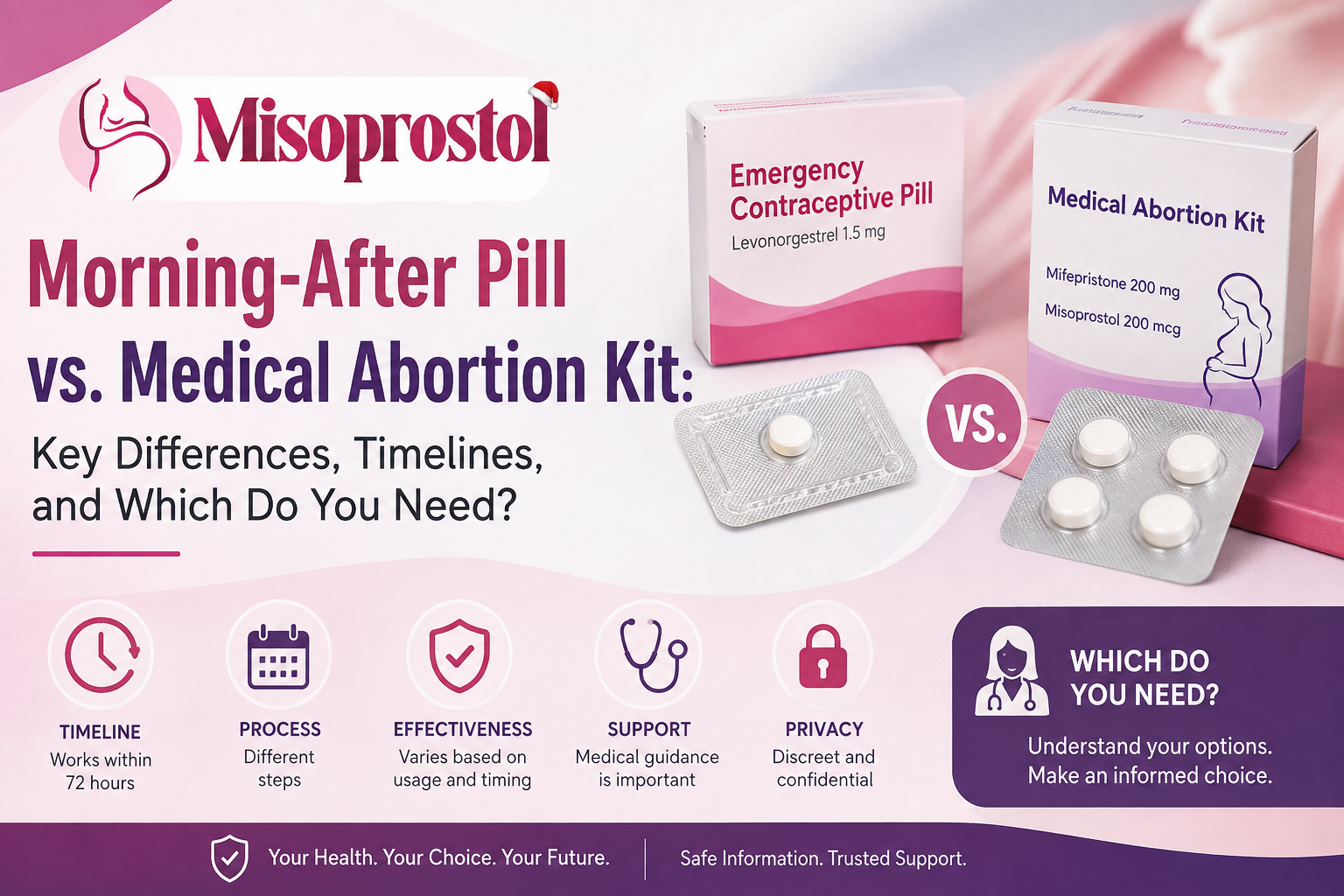
Morning-After Pill vs. Medical Abortion Kit: Key Differences, Timelines, and Which Do You Need?
The morning-after pill vs medical abortion kit are often confused, but they are designed for two completely different situations. If you have recently had unprotected sex or discovered that you are pregnant, understanding the difference between emergency contraception and medical abortion can help you understand which type of care may be appropriate.
The simplest distinction is this: emergency contraception is intended to prevent pregnancy after sex, while medical abortion is used to end an existing pregnancy. They are not interchangeable.
Understanding how these options differ—including their purpose, timing, medicines, and what to expect—can help you make informed decisions and seek appropriate medical care.
Important: This article provides general health information and is not a substitute for an assessment by a qualified healthcare professional. If you think you may be pregnant or are considering an abortion, contact an NHS service, GP, sexual health clinic, or licensed abortion provider for individual advice.
Morning-After Pill vs. Medical Abortion: At a Glance
| Morning-After Pill | Medical Abortion | |
|---|---|---|
| Main purpose | Prevent pregnancy after unprotected sex | End an existing pregnancy |
| When it is used | After sex, before an established pregnancy | After pregnancy has been established |
| Common medicines | Levonorgestrel or ulipristal acetate | Mifepristone and misoprostol |
| Primary action | Delays or prevents ovulation | Stops the pregnancy from continuing and causes the uterus to empty |
| Pregnancy already established? | Not intended to end an established pregnancy | Yes |
| Typical timeframe | Within 3 or 5 days after sex, depending on the medicine | Timing depends on gestational age and clinical assessment |
| Requires medical assessment? | Often available through pharmacies and sexual-health services | Requires care through a licensed abortion service or appropriate healthcare provider |
The NHS explains that emergency contraception is used after unprotected sex or contraceptive failure, whereas abortion is a treatment intended to end a pregnancy.
What Is the Morning-After Pill?
The morning-after pill, also called emergency contraception, is designed to reduce the chance of pregnancy after unprotected sex or when contraception has failed.
There are two main types used in the UK:
- Levonorgestrel, which should be taken within 72 hours of unprotected sex.
- Ulipristal acetate, which can be taken within 120 hours, or five days, of unprotected sex.
The sooner emergency contraception is used, the more likely it is to work.
Emergency contraception works primarily by preventing or delaying ovulation. It is not an abortion treatment.
This distinction is particularly important if you have already taken a pregnancy test and it is positive.
Does the morning-after pill cause an abortion?
No.
The morning-after pill is intended to prevent pregnancy from occurring following recent unprotected sex. It does not replace medical abortion medication and should not be used as a treatment for an established pregnancy.
If you believe you are already pregnant, you should speak with an appropriate healthcare provider about your options.
What Is a Medical Abortion?
A medical abortion uses medicines to end an existing pregnancy.
In the UK, early medical abortion commonly involves two medicines:
- Mifepristone
- Misoprostol
Mifepristone blocks the action of progesterone, a hormone needed to maintain pregnancy. Misoprostol then causes the uterus to contract, helping the pregnancy pass.
The NHS states that a medical abortion may sometimes be carried out at home when the pregnancy is under 10 weeks, depending on individual circumstances and the assessment of the healthcare provider.
A medical abortion is therefore fundamentally different from emergency contraception.
The Biggest Difference: Preventing Pregnancy vs. Ending Pregnancy
The easiest way to remember the difference is:
Morning-after pill = prevention
Medical abortion = termination of an existing pregnancy
Emergency contraception is used because pregnancy may occur after unprotected sex. Medical abortion is considered when pregnancy has already occurred and the person chooses to end it.
Taking emergency contraception when you are already pregnant is not a substitute for abortion care.
Likewise, using abortion medication as emergency contraception is inappropriate because it is designed for a completely different medical purpose.
When Should You Take the Morning-After Pill?
Timing matters with emergency contraception.
According to the NHS:
- Levonorgestrel should be taken within 72 hours (3 days) of unprotected sex.
- Ulipristal acetate should be taken within 120 hours (5 days).
- Emergency contraception generally works better the sooner it is used.
A copper intrauterine device (IUD) is another emergency contraception option and is the most effective form of emergency contraception.
If you are unsure which option is appropriate, a pharmacist, sexual-health professional, GP, or other qualified healthcare provider can assess your circumstances.
When Is Medical Abortion Considered?
Medical abortion is considered after pregnancy has occurred.
Before treatment, an abortion service may assess:
- How far the pregnancy has progressed
- Your medical history
- Any medicines you are taking
- Whether medical abortion is suitable for you
- Whether further assessment or an ultrasound is necessary
- Your available treatment options
The NHS explains that abortion services can be accessed through a GP, sexual-health clinic, or abortion provider.
For early pregnancy, medical abortion may be performed at home in appropriate circumstances after assessment by a licensed service.
How Long Does Each Process Take?
The timelines are very different.
Emergency contraception
Emergency contraception is taken after sex and before an established pregnancy. Depending on the medicine, the treatment window is up to three or five days after unprotected sex.
It is not intended to produce a miscarriage or end an established pregnancy.
Medical abortion
Medical abortion occurs over a longer process.
The NHS describes early medical abortion as involving mifepristone followed by misoprostol, generally with the second medicine taken 1 to 2 days later. After misoprostol, cramping and bleeding occur as the pregnancy passes.
Exactly how the process works and what follow-up is required depends on the pregnancy stage and the treatment plan provided by the abortion service.
What Can You Expect After a Medical Abortion?
Bleeding and cramping are expected parts of the medical abortion process.
The NHS notes that abdominal cramps or pain can occur for several days, while vaginal bleeding can continue for several weeks. Nausea and diarrhoea can also occur with the medicines used in medical abortion.
Your abortion provider should explain:
- What symptoms to expect
- What pain relief is appropriate
- How to confirm that the abortion is complete
- What warning signs require medical attention
- Where to obtain follow-up support
Do not rely solely on information from an online seller when making decisions about abortion medication.
What Happens After Taking Emergency Contraception?
Emergency contraception does not end an existing pregnancy.
Your next period may come earlier or later than expected, and some people experience temporary side effects. If your period is significantly delayed or you are concerned that you could be pregnant, take a pregnancy test and seek appropriate medical advice.
The emergency contraceptive pill also does not protect against sexually transmitted infections (STIs).
What If You Are Not Sure Whether You Are Pregnant?
If you have recently had unprotected sex and are not sure whether pregnancy has occurred, the appropriate option may depend on how long it has been since sex.
If pregnancy has already been established, emergency contraception is not the appropriate treatment for ending that pregnancy.
If you are unsure, a pharmacist, GP, sexual-health clinic, or licensed abortion provider can help you determine what type of care is appropriate.
Can You Use Misoprostol as the Morning-After Pill?
No.
This is an important misconception to avoid.
Misoprostol is used as part of medical abortion care, but it is not the standard morning-after pill.
Medical abortion commonly uses mifepristone followed by misoprostol under the care of an appropriate healthcare provider.
The emergency contraceptive pills used in the UK contain different active medicines, such as levonorgestrel or ulipristal acetate.
Because these medicines have different purposes, they should not be treated as interchangeable.
Is a Medical Abortion the Same as a Miscarriage?
A medical abortion and miscarriage are different circumstances, although some of the physical symptoms can be similar.
During a medical abortion, medication is intentionally used to end a pregnancy. During a miscarriage, a pregnancy ends naturally without being intentionally induced.
Both can involve bleeding and cramping, but the medical care and circumstances are different.
If you experience unexpected pregnancy loss, heavy bleeding, severe pain, fever, or other concerning symptoms, seek medical attention.
When Should You Seek Medical Help?
After an abortion, contact an appropriate healthcare service if you are concerned about your recovery.
The NHS advises seeking urgent medical advice if pain or bleeding is not improving after several days, you still feel pregnant after about a week, or you develop possible signs of infection such as a temperature, flu-like symptoms, or unusual vaginal discharge.
Seek emergency medical care for severe or rapidly worsening symptoms.
If you have taken medication obtained online and are unsure what it contains, tell the healthcare professional exactly what you took and, if possible, provide the packaging.
Where Can You Get Help in the UK?
Emergency contraception can be obtained through services including sexual-health clinics, GP surgeries, and pharmacies. Some emergency contraceptive pills are also available directly from pharmacies.
For abortion care, the NHS says you can contact:
- Your GP
- A sexual-health clinic
- A licensed abortion provider
You can also contact an abortion provider directly in many circumstances.
The important point is to use a legitimate healthcare pathway so that your pregnancy stage, medical history, and treatment options can be properly assessed.
Frequently Asked Questions
Is the morning-after pill an abortion pill?
No. The morning-after pill is emergency contraception intended to prevent pregnancy after unprotected sex or contraceptive failure. Medical abortion medication is used to end an existing pregnancy.
Can the morning-after pill end an existing pregnancy?
No. It is not intended to terminate an established pregnancy.
Is misoprostol the morning-after pill?
No. Misoprostol is used in medical abortion and other medical settings. It is not one of the standard emergency contraceptive pills used in the UK.
How soon can I take emergency contraception?
Depending on the medicine, emergency contraception should be taken within 72 hours or 120 hours after unprotected sex. Earlier use is generally more effective.
How early can a medical abortion be performed?
Medical abortion options depend on pregnancy stage and individual circumstances. In the UK, early medical abortion may sometimes be carried out at home when someone is under 10 weeks pregnant, following assessment by an appropriate service.
Can I buy abortion pills online?
The NHS specifically advises against buying abortion pills online because you may not know whether the medicines are genuine or harmful. Abortion medicines should be prescribed through an appropriate healthcare service.
Read more: How Long Does Misoprostol Take to Work? What to Expect
Final Takeaway
The morning-after pill vs medical abortion kit comparison is important because these options serve very different purposes.
The morning-after pill is emergency contraception used after unprotected sex to reduce the chance of pregnancy. Medical abortion involves medicines such as mifepristone and misoprostol to end an existing pregnancy.
If you are unsure which situation applies to you, don’t guess based on the name of a medicine or information from an online marketplace. A qualified healthcare professional or licensed abortion service can help you understand your options and determine what care is appropriate.
Medical Disclaimer
This article is for general educational purposes only. It does not provide a diagnosis, prescribe medication, or replace advice from a qualified healthcare professional. Pregnancy-related decisions should be made with appropriate medical guidance, particularly if you have medical conditions, take other medicines, have severe symptoms, or are unsure how far along a pregnancy may be.