
No products in the cart.
How Long Does Misoprostol Take to Work? Timeline, Bleeding and What to Expect
If you have been prescribed misoprostol as part of a medical abortion, one of the most common questions is: how long does misoprostol take to work?
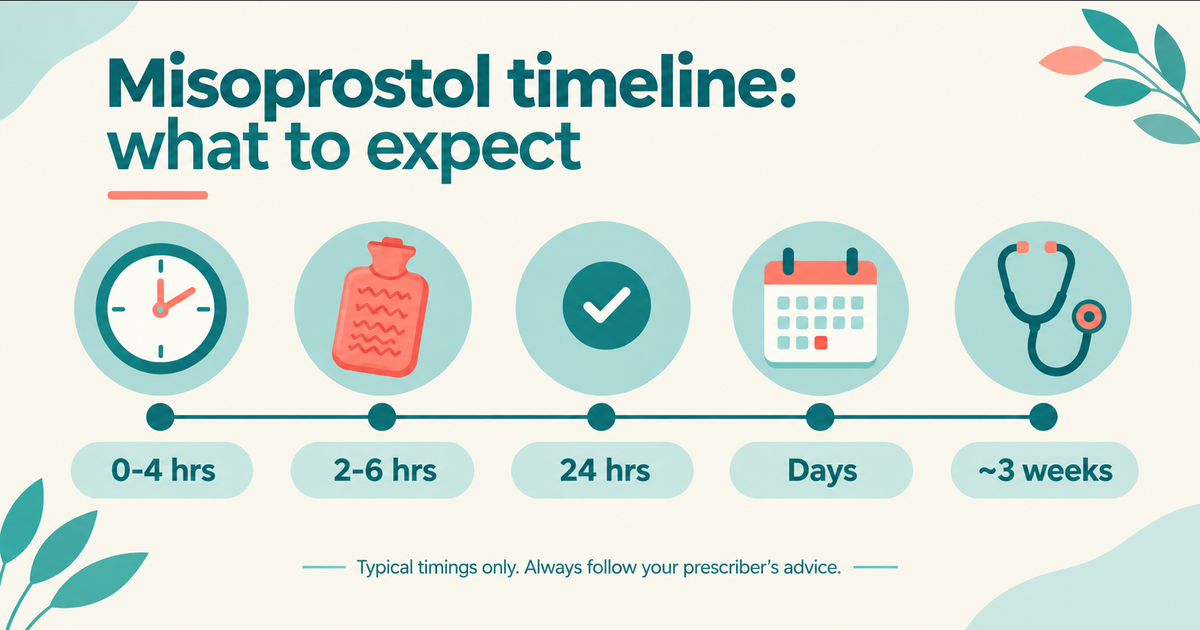
The timing can vary from person to person, but cramping and bleeding commonly begin within a few hours after misoprostol. According to the Royal College of Obstetricians and Gynaecologists (RCOG), the process usually starts within 1 to 2 hours and is generally completed within around 4 to 6 hours, although individual experiences can differ.
Understanding what may happen after taking misoprostol can make the process less stressful. This guide explains the typical timeline, what bleeding and cramping may feel like, how long bleeding can continue, and when medical advice is important.
Important: Misoprostol should be used according to instructions from a qualified healthcare professional. This article provides general educational information and is not a substitute for medical advice.
What Is Misoprostol?
Misoprostol is a medicine that causes the uterus to contract. In medical abortion, it is commonly used after mifepristone to help the uterus expel the pregnancy.
For early medical abortion, NHS guidance explains that mifepristone is taken first, followed by misoprostol 1 to 2 days later. The pregnancy generally begins to pass around 4 to 6 hours after the second medicine.
The exact treatment process can depend on how far the pregnancy has progressed and the healthcare provider’s protocol. You should therefore follow the instructions provided with your prescribed treatment rather than relying on a general online timeline.
How Long Does Misoprostol Take to Work?
For medical abortion, the effects of misoprostol often begin relatively quickly.
A typical pattern may look like this:
| Approximate timeframe | What may happen |
|---|---|
| First few hours | Cramping and bleeding may begin |
| 1–2 hours | Many people begin experiencing uterine contractions and bleeding |
| 4–6 hours | The pregnancy will often have passed during this period |
| Following days | Bleeding and cramping generally become lighter |
| Following 1–2 weeks | Light bleeding or spotting may continue |
| Several weeks | Some people may experience occasional bleeding for longer |
These are general timeframes rather than guarantees. RCOG states that cramping and bleeding usually begin within 1 to 2 hours and that the abortion is usually completed within 4 to 6 hours, but some people may require additional medical treatment if the pregnancy does not pass completely.
What Happens After Taking Misoprostol?
Misoprostol causes the uterus to contract. These contractions help expel the pregnancy through the vagina.
The first noticeable symptom may be abdominal cramping. Bleeding usually follows or occurs around the same time. The bleeding can be heavier than a normal menstrual period, and clots may occur.
You may also experience symptoms such as:
- Strong abdominal cramps
- Vaginal bleeding
- Passing blood clots
- Nausea
- Vomiting
- Diarrhoea
- Chills or feeling temporarily feverish
Not everyone experiences the same combination or intensity of symptoms.
RCOG notes that pain and bleeding are expected during medical abortion and that appropriate pain relief should be offered as part of abortion care.
How Long Does Bleeding Last After Misoprostol?
The heaviest bleeding generally occurs around the time the pregnancy is being expelled. Afterward, bleeding should gradually become lighter.
Some people continue to experience bleeding or spotting for days or even several weeks. RCOG states that bleeding can continue for several weeks after a medical abortion.
The important point is that bleeding should generally become lighter over time.
If bleeding becomes increasingly heavy rather than gradually improving, or if you feel unwell, contact your healthcare provider for advice.
How Heavy Is Bleeding After Misoprostol?
Bleeding can be heavier than your usual period, particularly while the pregnancy is passing. You may also see blood clots.
The amount of bleeding varies between individuals, so the presence or absence of heavy bleeding alone cannot confirm whether the abortion has been completed.
RCOG advises that people receiving medical abortion should be given information about expected bleeding as well as instructions about symptoms that require medical attention.
If you are concerned about how much you are bleeding, contact the abortion service or healthcare professional who provided your treatment.
What Do Misoprostol Cramps Feel Like?
Cramping occurs because misoprostol causes the uterus to contract.
Some people describe the cramps as similar to strong period pain, while others experience more intense pain. The strongest cramps generally occur while the pregnancy is passing and should gradually improve afterward.
Your healthcare provider should give you appropriate advice about pain relief before or during treatment.
If pain becomes severe, does not improve with the recommended pain relief, or is accompanied by other concerning symptoms, seek medical advice.
What If Misoprostol Has Not Started Working?
The timing is not identical for everyone. However, little or no bleeding can sometimes be a reason to contact your abortion provider.
RCOG guidance identifies no bleeding or only very light bleeding within 24 hours after misoprostol as a possible sign that the abortion may not have worked and recommends appropriate medical assessment.
Do not automatically take additional medication because bleeding has not started. Instead, contact the healthcare professional or abortion service that provided your treatment and follow their instructions.
How Do You Know If the Abortion Has Worked?
Bleeding and cramping can indicate that the medication is having an effect, but symptoms alone do not always confirm that the pregnancy has completely ended.
Your healthcare provider may give you specific follow-up instructions, which can include a pregnancy test at an appropriate time or other assessment depending on your circumstances.
RCOG notes that continuing pregnancy may sometimes be suspected when there is little or no bleeding after medical abortion or when pregnancy symptoms continue beyond about a week.
If you are uncertain whether the abortion was successful, contact your abortion provider rather than relying solely on symptoms.
When Should You Seek Urgent Medical Help?
Most medical abortions are safe, but serious complications can occasionally occur.
Seek urgent medical attention if you experience:
- Very heavy vaginal bleeding
- Severe or worsening abdominal pain
- Fainting or significant dizziness
- Feeling very unwell
- A persistent high temperature or fever
- Unusual or unpleasant-smelling vaginal discharge
- Symptoms that concern you or are getting worse rather than better
RCOG specifically lists very heavy bleeding, ongoing or new abdominal pain, fever, unusual-smelling discharge and feeling generally unwell among symptoms requiring medical attention.
If you are experiencing severe symptoms or believe you may have an emergency, seek urgent medical care rather than waiting for symptoms to resolve.
What Happens in the Days After Misoprostol?
Once the pregnancy has passed, the strongest cramps should settle and bleeding should gradually decrease.
You may continue to have lighter bleeding or spotting for some time. Some pregnancy symptoms should also begin to improve.
Your healthcare provider should give you instructions about follow-up and tell you who to contact if you have concerns.
Do not assume that continued bleeding automatically means something is wrong. At the same time, worsening bleeding, severe pain, fever or feeling increasingly unwell should not be ignored.
Can You Become Pregnant Again After a Medical Abortion?
Fertility can return quickly following an abortion. Ovulation may occur before the next menstrual period.
If you do not want to become pregnant again, discuss contraception with your healthcare provider. RCOG notes that contraception can be started around the time of medical abortion, depending on the method and individual circumstances.
Frequently Asked Questions
How quickly does misoprostol start working?
For medical abortion, cramping and bleeding commonly begin within 1 to 2 hours after misoprostol, although timing varies. The process is usually completed within around 4 to 6 hours.
Is bleeding after misoprostol normal?
Yes. Vaginal bleeding is an expected part of medical abortion. It may initially be heavier and can include clots before gradually becoming lighter.
How long will I bleed after taking misoprostol?
Bleeding can continue for days and, in some cases, several weeks. It should generally become lighter as recovery progresses.
What if I have no bleeding after misoprostol?
Contact your abortion provider for advice, particularly if there has been no bleeding within 24 hours. Do not take additional medication without professional instructions.
Does bleeding prove that the abortion was successful?
No. Bleeding and cramping indicate that the medicine is affecting the uterus, but they do not by themselves confirm that the pregnancy has completely ended. Follow the follow-up instructions provided by your healthcare professional.
When should I worry about bleeding?
Seek medical advice if bleeding is very heavy, becomes worse rather than lighter, or is accompanied by severe pain, dizziness, fainting, fever or feeling very unwell.
Final Thoughts
So, how long does misoprostol take to work? For many people undergoing medical abortion, cramping and bleeding begin within a few hours, often within 1 to 2 hours, and the main process is commonly completed within approximately 4 to 6 hours. However, individual experiences vary, and the timeline should not be treated as a guarantee.
The most important steps are to use misoprostol exactly as directed by your healthcare provider, understand what symptoms to expect, follow the recommended follow-up plan, and seek medical help if you develop heavy bleeding, severe pain, fever, fainting or other concerning symptoms.
For reliable medical information, always discuss your individual circumstances with a qualified healthcare professional or abortion-care provider.
Have Questions About Misoprostol?
If you are considering misoprostol or have questions about what to expect after using it, make sure you understand the treatment, possible side effects, and when medical advice may be necessary.
Learn more about available misoprostol products and treatment options.