
No products in the cart.
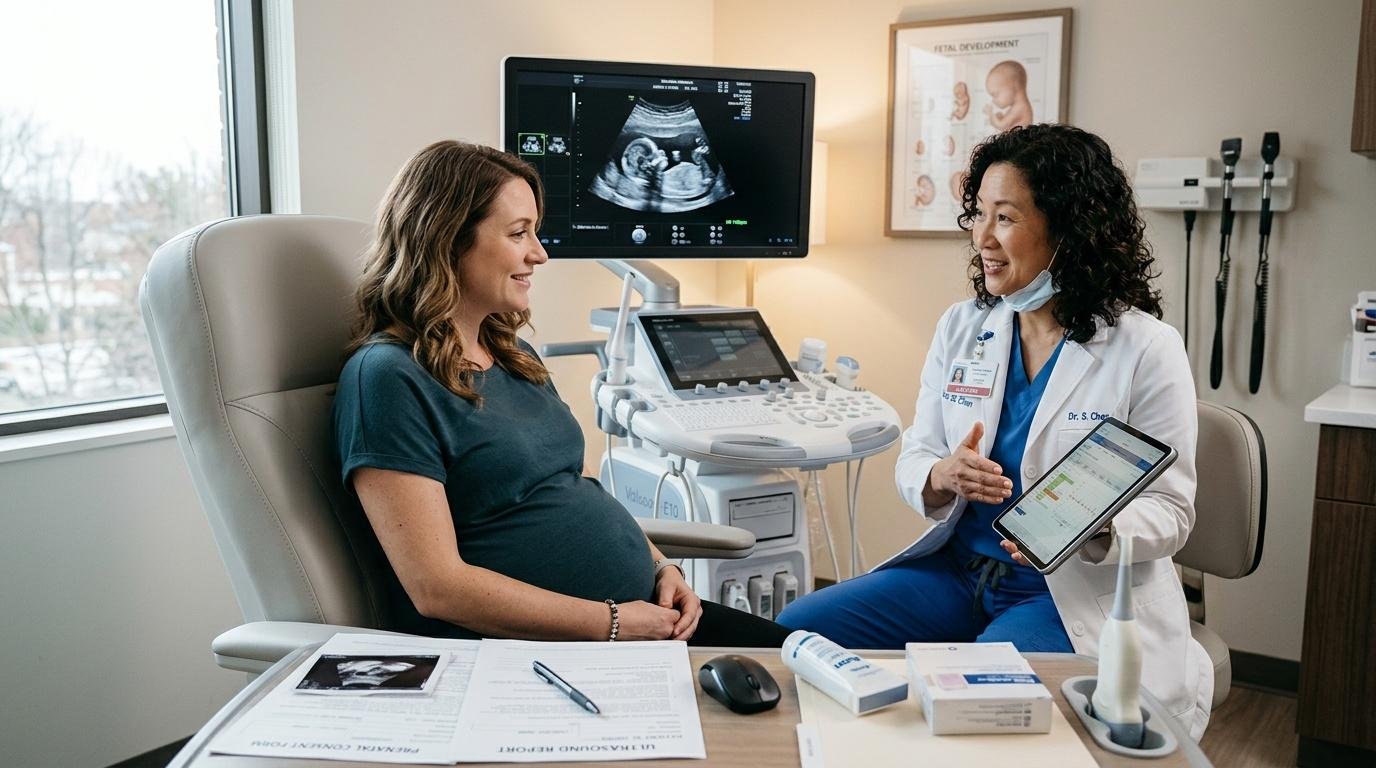
Early Pregnancy Assessment in the UK: What Happens During a Clinical Consultation?
An early pregnancy assessment in the UK helps healthcare professionals evaluate symptoms, confirm the location of a pregnancy and identify possible complications during the first weeks of pregnancy. Women experiencing vaginal bleeding, abdominal discomfort or other unusual symptoms may be referred to an Early Pregnancy Assessment Unit (EPAU) for specialist evaluation.
Early pregnancy can involve many physical and emotional changes. While some symptoms are common, others may require prompt medical attention. Understanding what happens during a clinical consultation can help patients feel more prepared and know what questions to ask their healthcare team.
This guide explains how early pregnancy assessments work, what tests may be performed, what ultrasound scans can show and when urgent medical care is necessary.
What Is an Early Pregnancy Assessment?
An early pregnancy assessment is a medical evaluation carried out by qualified healthcare professionals to investigate concerns during the early weeks of pregnancy.
In the UK, these assessments are commonly provided through hospital-based Early Pregnancy Assessment Units. These specialist services help investigate symptoms and assess possible complications, including miscarriage and ectopic pregnancy.
A healthcare professional may recommend an assessment when someone experiences:
- Vaginal bleeding or spotting.
- Lower abdominal or pelvic pain.
- Pain that is more noticeable on one side.
- Unusual discomfort or cramping.
- Symptoms that may indicate an early pregnancy complication.
- Concerns following a previous ectopic pregnancy or miscarriage.
The assessment aims to understand the patient’s symptoms and determine whether further investigations or follow-up appointments are required.
Who May Need an Early Pregnancy Assessment in the UK?
Not everyone needs an early pregnancy assessment. However, a healthcare professional may recommend one when symptoms or medical history indicate that further investigation is appropriate.
People who may require an assessment include:
1. Individuals experiencing vaginal bleeding
Light spotting can occur during early pregnancy, but bleeding should not automatically be assumed to be harmless. A clinician can assess the symptoms and decide whether an ultrasound or other investigations are necessary.
2. Individuals experiencing abdominal pain
Mild discomfort can have several causes. However, persistent, severe or one-sided abdominal pain requires medical assessment, particularly when pregnancy is possible.
3. Individuals with a previous ectopic pregnancy
A history of ectopic pregnancy may increase the need for early clinical assessment in a subsequent pregnancy.
4. Individuals with a history of recurrent miscarriage
People with previous pregnancy losses may benefit from specialist assessment and appropriate follow-up.
The need for assessment depends on individual symptoms, medical history and clinical findings.
What Happens During an Early Pregnancy Clinical Consultation?
An early pregnancy consultation generally involves several steps. The exact process depends on the patient’s symptoms, pregnancy stage and the healthcare service providing care.
1. Medical History and Symptom Review
The healthcare professional will usually begin by asking questions about the patient’s health and pregnancy history.
These questions may include:
- When was the last menstrual period?
- Has a pregnancy test been performed?
- When did the symptoms begin?
- Is there any vaginal bleeding?
- Is abdominal pain present, and where is it located?
- Has there been a previous miscarriage or ectopic pregnancy?
- Are there any existing medical conditions or medications?
Providing accurate information helps clinicians understand the situation and determine which investigations may be appropriate.
2. Pregnancy Testing
If pregnancy has not already been confirmed, a urine pregnancy test may be recommended.
A positive test indicates that pregnancy hormones are present, but it does not establish where the pregnancy is located or whether it is developing normally.
Additional investigations may therefore be necessary.
3. Ultrasound Examination
An ultrasound scan is an important part of many early pregnancy assessments.
A transvaginal ultrasound scan may be offered to examine the uterus and surrounding structures more clearly. It can help healthcare professionals assess:
- The location of the pregnancy.
- Whether a gestational sac is visible.
- Whether an embryo can be identified.
- Whether a fetal heartbeat is visible, depending on the stage of pregnancy.
- Whether there are signs that require further investigation.
An abdominal ultrasound may also be considered in certain circumstances.
Sometimes, a pregnancy is too early to be clearly identified during the first scan. This does not automatically mean that a pregnancy has ended. A repeat scan or additional monitoring may be recommended.
4. Blood Tests and Pregnancy Hormone Levels
Healthcare professionals may request blood tests to measure human chorionic gonadotrophin (hCG), a hormone produced during pregnancy.
Depending on the clinical situation, more than one blood test may be required, often approximately 48 hours apart.
Comparing hCG measurements can help clinicians understand how the pregnancy may be developing.
However, hCG results should not be interpreted in isolation. Symptoms, ultrasound findings and the patient’s overall clinical condition are also important.
5. Discussion of Results and Follow-Up Care
After the initial investigations, the healthcare team will explain the findings and discuss the next steps.
Depending on the results, patients may be advised to:
- Continue routine pregnancy care.
- Attend another ultrasound appointment.
- Have additional blood tests.
- Receive specialist gynaecological assessment.
- Seek urgent medical attention if symptoms worsen.
When the pregnancy location or outcome is not yet clear, further monitoring may be necessary before a diagnosis can be made.
Understanding Early Pregnancy Ultrasound Results
Ultrasound findings can vary depending on how far along the pregnancy is.
During very early pregnancy, some structures may not yet be visible. This is why healthcare professionals consider the estimated pregnancy dates alongside scan findings and other clinical information.
A scan may identify:
An intrauterine pregnancy: A pregnancy located inside the uterus.
An early pregnancy with uncertain viability: The scan may not yet provide enough information to confirm whether the pregnancy is developing normally.
A pregnancy of unknown location: A positive pregnancy test is present, but the pregnancy cannot yet be located through ultrasound.
A possible ectopic pregnancy: Findings may suggest that the pregnancy has developed outside the uterus, most commonly in a fallopian tube.
A diagnosis should be made by appropriately qualified healthcare professionals using the complete clinical picture.
When Should You Seek Urgent Medical Attention?
Some early pregnancy symptoms require immediate medical evaluation.
Seek emergency medical attention if you experience:
- Severe or worsening abdominal or pelvic pain.
- Sudden, intense pain, particularly on one side.
- Shoulder-tip pain.
- Heavy vaginal bleeding.
- Severe dizziness, fainting or collapse.
- Significant weakness or signs of shock.
These symptoms may indicate a serious complication, including a ruptured ectopic pregnancy.
Call 999 or attend the nearest A&E department immediately if you experience severe symptoms or feel faint or collapse. Do not wait for a routine early pregnancy appointment.
For concerning symptoms that are not immediately life-threatening, contact your GP, NHS 111 or an appropriate early pregnancy service for advice.
How to Prepare for an Early Pregnancy Appointment
Preparing for an appointment can make the consultation more useful and help patients communicate their concerns clearly.
Consider the following:
- Record the date of your last menstrual period.
- Note when any symptoms started.
- Keep a record of bleeding, pain or other unusual symptoms.
- Bring information about previous pregnancies and relevant medical conditions.
- Prepare a list of current medications.
- Write down questions you want to discuss with the healthcare professional.
Patients can also ask about the purpose of each test, when results will be available and whom to contact if symptoms change.
Frequently Asked Questions
How early can an early pregnancy assessment be performed?
The timing depends on the symptoms, medical history and clinical circumstances. Some concerns require immediate assessment, while the timing of an ultrasound may depend on how far along the pregnancy is.
Does every early pregnancy assessment include an ultrasound?
No. The investigations depend on the patient’s symptoms and clinical needs. However, ultrasound is commonly used when clinicians need to establish the location or development of a pregnancy.
Can an early ultrasound be inconclusive?
Yes. Very early pregnancies may not yet show all the structures needed for a definite diagnosis. Healthcare professionals may recommend repeat ultrasound examinations and blood tests.
How long does an early pregnancy assessment take?
The duration varies according to the investigations required, waiting times and whether further specialist reviews are needed. Patients should check appointment details with their local hospital.
Can I refer myself to an Early Pregnancy Assessment Unit?
Referral arrangements differ between NHS hospital trusts. Some services accept self-referrals in specific circumstances, while others require a GP, midwife or other healthcare professional to make a referral.
Final Thoughts
An early pregnancy assessment in the UK provides an important opportunity for healthcare professionals to investigate symptoms, assess pregnancy development and identify potential complications.
Clinical consultations may involve a medical history review, pregnancy testing, ultrasound examinations and blood tests. Not every patient will need all these investigations, and follow-up arrangements depend on individual findings.
Understanding the assessment process can help patients feel more informed and prepared when discussing their concerns with a healthcare professional.
If you are experiencing unusual symptoms during early pregnancy, seek advice from an appropriately qualified healthcare professional rather than relying on online information or self-diagnosis.
Medical information notice: This article is for general educational purposes and does not replace an individual medical consultation, diagnosis or treatment advice.