
No products in the cart.
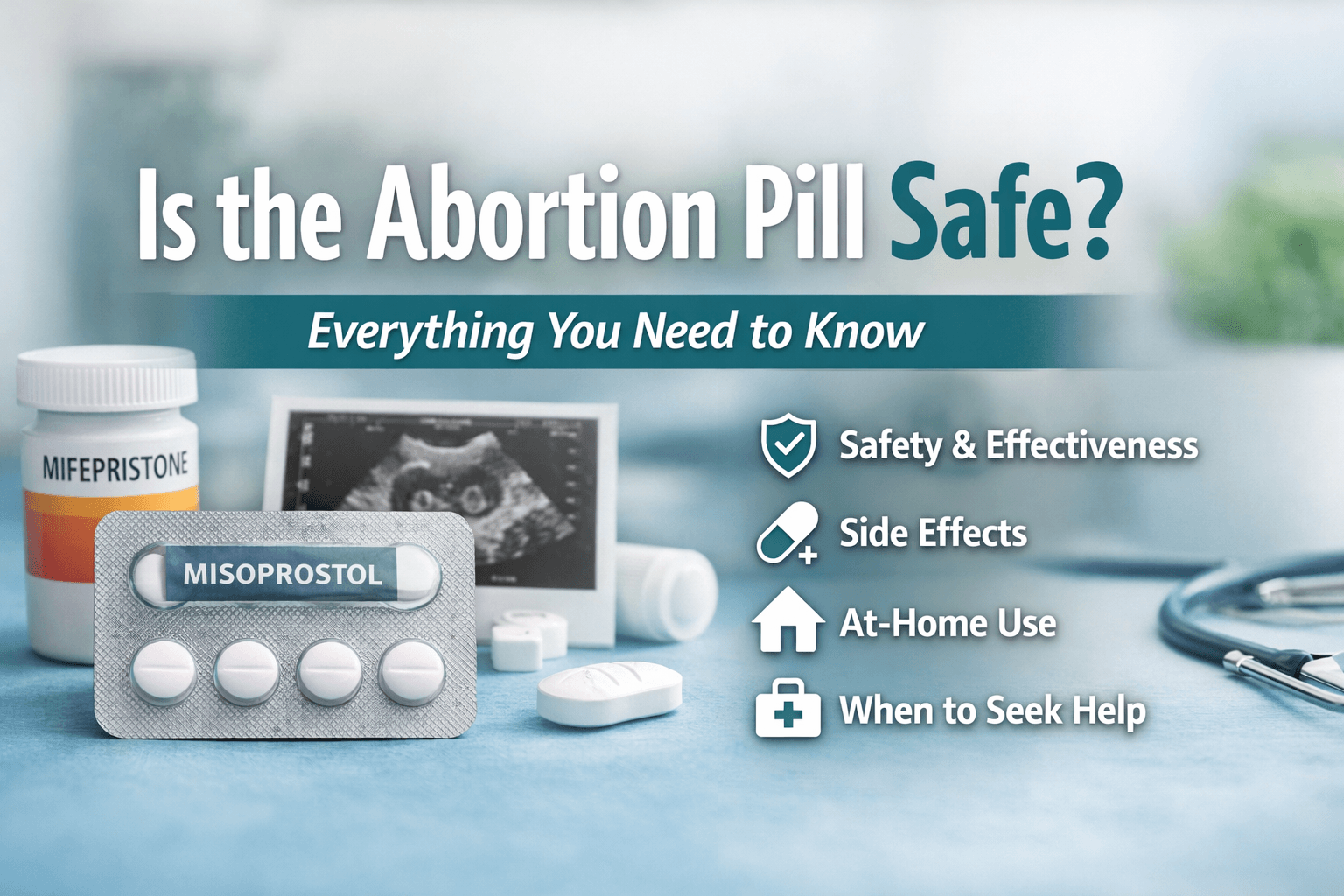
Is the Abortion Pill Safe? Everything You Need to Know
The decision to end a pregnancy is a deeply personal one, and it is natural to have questions about the safety and long-term effects of the methods available. One of the most common methods used today is the abortion pill, also known as medication abortion.
As access to reproductive healthcare continues to evolve, understanding the medical reality of the abortion pill is more important than ever. In this comprehensive guide, we will break down the safety data, how the process works, what the side effects look like, and the long-term implications for your health.
What Exactly is the Abortion Pill?
First, it is important to clarify what the “abortion pill” actually is. It is not a single pill, but rather a combination of two different medications: Mifepristone and Misoprostol.
This protocol is typically FDA-approved for use up to 10 weeks (70 days) of pregnancy. It is distinct from the “Morning After Pill” (emergency contraception), which prevents pregnancy before it begins. The abortion pill terminates an existing early pregnancy.
Is the Abortion Pill Safe? The Medical Evidence
The short answer is: Yes, the abortion pill is exceptionally safe.
According to decades of research from organizations like the World Health Organization (WHO), the American College of Obstetricians and Gynecologists (ACOG), and the FDA, medication abortion is a standard, low-risk medical procedure.
Key Safety Statistics
- Success Rate: The abortion pill is effective approximately 95–98% of the time for pregnancies under 10 weeks.
- Complication Rate: Serious complications occur in less than 0.5% of cases. For context, this makes the abortion pill statistically safer than taking common over-the-counter medications like Tylenol or undergoing a routine wisdom tooth extraction.
- Comparison to Childbirth: Statistically, the risk of serious complications from a medication abortion is significantly lower than the risk of complications associated with carrying a pregnancy to term and giving birth.
How the Process Works: Step-by-Step
Understanding the mechanism of the medication can help alleviate anxiety about the process. The two drugs work together in a specific sequence:
1. Mifepristone (The First Pill)
Mifepristone works by blocking progesterone, a hormone naturally produced by the body that is necessary for a pregnancy to continue. Without progesterone, the lining of the uterus breaks down, and the pregnancy cannot stay attached.
2. Misoprostol (The Second Set of Pills)
Taken 24 to 48 hours after the first pill, Misoprostol causes the cervix to soften and the uterus to contract. This pushes the pregnancy tissue out of the body. This part of the process is very similar to an early miscarriage.
What to Expect: Side Effects vs. Complications
Because the abortion pill works by inducing uterine contractions, you will experience physical symptoms. It is vital to distinguish between normal side effects and warning signs of a complication.
Normal Side Effects (Expected)
These symptoms indicate the medication is working:
- Heavy Bleeding and Cramping: This is necessary to empty the uterus. Cramping is often stronger than a typical period.
- Passing Blood Clots: It is normal to pass clots, sometimes as large as a lemon.
- Nausea and Vomiting: Usually short-lived after taking Misoprostol.
- Low-grade Fever or Chills: Common shortly after taking the second medication.
Warning Signs (When to Call a Doctor)
While rare, you should seek medical attention if you experience:
- Excessive Bleeding: Soaking through two or more maxi pads per hour for two hours straight.
- Severe Pain: Pain that is not managed by over-the-counter medication (like Ibuprofen).
- High Fever: A fever over 100.4°F ($38^\circ\text{C}$) that lasts more than 24 hours or starts the day after taking Misoprostol.
- No Bleeding: If you do not bleed at all after taking the second medication, the abortion may not have been successful.
Debunking Common Myths
Misinformation regarding reproductive health is prevalent. Let’s address some of the most common myths regarding the abortion pill’s safety.
Myth 1: It Causes Infertility
Fact: There is no scientific evidence linking medication abortion to future fertility issues, ectopic pregnancy, or birth defects in future pregnancies. Most people can become pregnant again very shortly after the procedure if they choose to.
Myth 2: It Increases the Risk of Breast Cancer
Fact: Extensive studies by the National Cancer Institute and the American Cancer Society have confirmed that there is no link between abortion and breast cancer.
Myth 3: It is Traumatic for the Body
Fact: Physically, the body handles a medication abortion similarly to a natural miscarriage. While the experience involves discomfort, the body is biologically equipped to manage the process of emptying the uterus.
Long-Term Physical and Emotional Health
Physical Recovery
Most people return to their normal activities within 1–2 days. Bleeding may continue off and on for several weeks, similar to a lingering period. It is generally recommended to follow up with a healthcare provider or take a pregnancy test after 3–4 weeks to ensure the process is complete.
Emotional Wellbeing
Everyone’s emotional response is different. While some feel relief, others may feel sadness or guilt. These are all valid emotions. However, psychological studies consistently show that the most common emotion reported after an abortion is relief, and there is no evidence that abortion causes long-term mental health disorders (formerly referred to incorrectly as “post-abortion syndrome”).
Safety Tips for a Smooth Experience
If you are choosing medication abortion, here is how you can ensure the safest experience possible:
- Confirm Pregnancy Dating: Ensure you are within the 10-week window via an ultrasound or a calculated start of your last period.
- Source Safely: Only obtain medications through licensed healthcare providers, reputable clinics (like Planned Parenthood), or verified telehealth services. Avoid “black market” pills.
- Have a Support System: If possible, have a trusted friend or partner with you during the process for emotional support and to help if you need anything.
- Pain Management: Stock up on Ibuprofen (Advil/Motrin) and a heating pad. Avoid Aspirin as it can increase bleeding.
- Stay Hydrated: Drink plenty of fluids and rest.
Conclusion: A Safe, Evidence-Based Option
The abortion pill is a cornerstone of modern reproductive healthcare. When used correctly, it provides a safe, private, and effective way to manage one’s reproductive future. By relying on medical facts rather than stigma, we can ensure that individuals make the best decisions for their health and lives.
The most important factor in safety is information. Knowing what is normal and having a plan for medical follow-up ensures that the vast majority of people who use the abortion pill have a successful and uncomplicated experience.
Frequently Asked Questions (FAQ)
Q: Can I take the abortion pill at home?
A: Yes. In many regions, you can take the medication in the comfort and privacy of your own home after a consultation with a provider.
Q: How soon can I use birth control after the abortion pill?
A: You can start most forms of birth control (like the pill or patch) immediately after taking the second medication.
Q: Does the abortion pill hurt?
A: It varies by individual. Most describe it as very intense period cramping. Over-the-counter pain relief is highly effective for most people.