
No products in the cart.
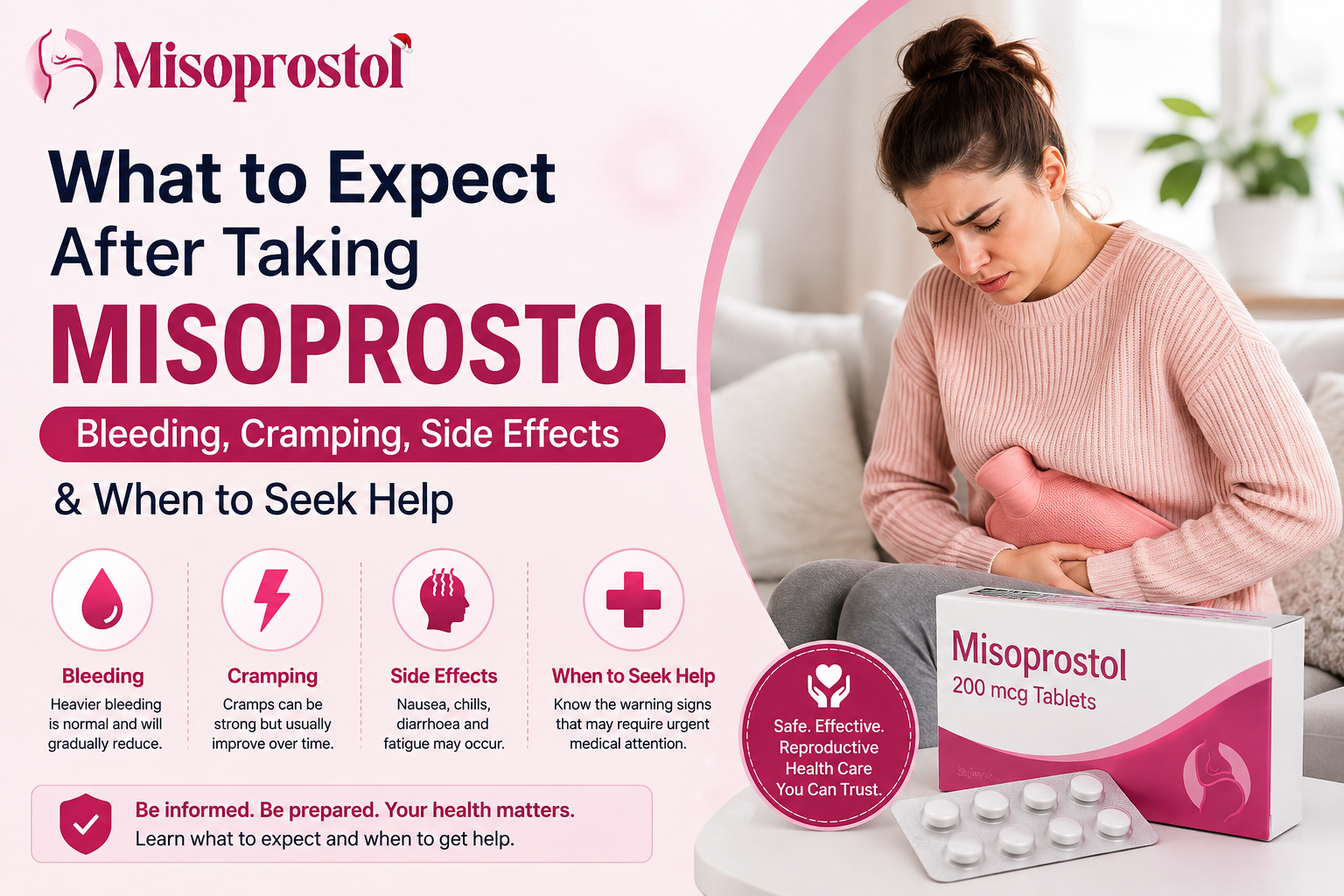
What to Expect After Taking Misoprostol: Bleeding, Cramping, Side Effects & When to Seek Help
What to expect after taking misoprostol can vary from person to person, but bleeding, cramping, and other temporary side effects are commonly expected when misoprostol is used as part of a medical abortion. Understanding what is normal—and what may require urgent medical attention—can make the experience less stressful.
Misoprostol causes the uterus to contract, which helps the body pass pregnancy tissue during a medical abortion. The experience can vary depending on factors such as how far the pregnancy has progressed and the treatment used.
This guide explains what you may experience after taking misoprostol, how symptoms can change over time, and which warning signs mean you should seek medical help.
Important: This article provides general health information and is not a substitute for advice from a qualified healthcare professional. If you have been given specific aftercare instructions by your abortion provider, follow those instructions.
What Happens After Taking Misoprostol?
Misoprostol causes contractions of the uterus. During a medical abortion, these contractions help the uterus empty its contents.
Cramping and vaginal bleeding commonly begin after misoprostol. Some people experience symptoms relatively quickly, while for others it may take longer for bleeding and cramping to begin.
The most noticeable symptoms often occur while the pregnancy tissue is passing. Once this has happened, the strongest cramps generally begin to settle and bleeding should gradually become lighter.
NHS guidance notes that abdominal cramps or pain can occur for several days following an abortion, while vaginal bleeding may continue for several weeks.
Bleeding After Misoprostol: What Is Normal?
Bleeding is one of the most expected effects after misoprostol when it is used for medical abortion.
The bleeding may initially be heavier than your usual menstrual period. You may also pass blood clots and pregnancy tissue.
Some people experience heavier bleeding for several hours before it begins to decrease. After the main part of the abortion has occurred, bleeding generally becomes lighter and may resemble a period.
Light bleeding or spotting can continue for days or, in some cases, several weeks.
Why Does Misoprostol Cause Bleeding?
Misoprostol causes the uterus to contract. These contractions help the uterus expel its contents, resulting in vaginal bleeding.
Because the process is different from a normal menstrual period, bleeding can initially be heavier and may include clots or tissue.
How Long Does Bleeding Last?
There is no single timeline that applies to everyone.
Generally:
- Heavier bleeding occurs during the main part of the process.
- Bleeding should gradually become lighter afterward.
- Spotting or lighter bleeding may continue for days or weeks.
- The pattern can vary depending on the individual and the pregnancy.
Some NHS patient guidance states that bleeding can continue for several weeks after a medical abortion.
If bleeding is becoming progressively heavier rather than lighter, or you are concerned about the amount of blood you are losing, contact your healthcare provider.
Cramping After Misoprostol
Cramping is another expected effect.
Misoprostol causes the uterus to contract, so cramps may feel similar to—or stronger than—period pain. For some people, the cramps are mild; for others, they can become quite intense during the period when pregnancy tissue is being passed.
NHS hospital guidance describes period-type pain and cramping as common following medical abortion, with pain generally improving after the pregnancy passes.
How Long Does Cramping Last?
The strongest cramps are generally associated with the active part of the abortion.
After the pregnancy tissue passes, discomfort should normally begin to improve. Some cramping may continue for several days.
If pain is severe, persistent, worsening, or does not improve with the pain-relief plan recommended by your healthcare provider, seek medical advice.
Other Common Side Effects of Misoprostol
Misoprostol can cause temporary side effects in addition to bleeding and cramping.
These may include:
- Nausea
- Vomiting
- Diarrhoea
- Chills or shivering
- Temporary fever
- Headache
- Dizziness
- Tiredness
NHS information confirms that medicines used during medical abortion can cause symptoms such as diarrhoea and nausea, which generally settle relatively quickly.
Not everyone experiences all of these symptoms.
Chills and Fever After Misoprostol
Feeling cold, experiencing chills, or having a temporary increase in temperature can occur after misoprostol.
However, a fever that persists, becomes significant, or occurs together with other concerning symptoms should not simply be assumed to be a normal medication effect.
If you feel increasingly unwell, develop a persistent fever, or have severe abdominal pain or unpleasant-smelling vaginal discharge, contact a healthcare professional promptly.
These symptoms can sometimes indicate an infection or another complication.
Nausea, Vomiting and Diarrhoea
Some people experience gastrointestinal symptoms after taking misoprostol.
Nausea and diarrhoea are recognized side effects and commonly improve as the medication leaves the body.
Drink fluids as tolerated and follow any instructions provided by your healthcare provider.
If vomiting or diarrhoea is severe, persistent, or leaves you unable to keep fluids down, contact a healthcare professional.
What Happens to Pregnancy Tissue?
During the abortion process, you may notice blood clots or tissue passing through the vagina.
What you see can vary according to how far the pregnancy has progressed. Some people may notice tissue, while others may not clearly identify anything.
You do not need to examine tissue unless your healthcare provider has specifically instructed you to do so.
If you are unsure whether the abortion has completed, follow the follow-up instructions provided by your abortion service.
When Should You Seek Urgent Medical Help?
Although bleeding and cramping are expected, certain symptoms require prompt medical assessment.
Seek urgent medical attention if you experience:
Very heavy bleeding
Extremely heavy bleeding can be a medical emergency. NHS hospital guidance advises seeking emergency assessment when bleeding is excessive, particularly when it is accompanied by dizziness, light-headedness, or feeling unwell.
Severe or worsening abdominal pain
Pain that is severe, persistent, or not improving with recommended pain relief should be assessed by a healthcare professional.
Fever or feeling increasingly unwell
A persistent fever or feeling significantly unwell can require medical evaluation, particularly if accompanied by other symptoms.
Foul-smelling vaginal discharge
An offensive or unpleasant-smelling discharge following an abortion can be a warning sign of infection and should be assessed.
Severe dizziness, fainting or weakness
Significant dizziness, fainting, or weakness—particularly alongside heavy bleeding—requires urgent medical attention.
Continuing pregnancy symptoms
If you continue to feel pregnant or your follow-up test does not show the expected result, contact your healthcare provider. Further assessment may be necessary.
If you believe you are experiencing a medical emergency, seek emergency medical care immediately rather than waiting for symptoms to improve.
What Can Help During Recovery?
Your healthcare provider may recommend practical measures to make the recovery period more comfortable.
These can include:
Rest when needed
You may feel tired after the abortion. Give yourself time to rest and recover.
Keep track of bleeding
Using sanitary pads can make it easier to monitor how much you are bleeding, particularly during the first part of the process.
Stay hydrated
Drinking fluids can be helpful, particularly if you experience sweating, vomiting, diarrhoea, or heavier bleeding.
Use recommended pain relief
Follow the pain-relief instructions supplied by your healthcare provider. NHS guidance indicates that medicines such as ibuprofen may be used for pain following an abortion when appropriate.
Do not take medication that has not been recommended for you if you have a medical condition or other reason that makes it unsuitable.
Follow your provider’s aftercare instructions
Your provider may recommend a pregnancy test or another form of follow-up to confirm that the abortion has been completed.
Following the recommended follow-up is important, particularly if symptoms do not develop as expected or pregnancy symptoms continue.
How Do You Know If the Abortion Was Successful?
Symptoms alone cannot always confirm that a medical abortion has been completed.
Bleeding and cramping are expected effects, but they do not by themselves prove that the pregnancy has completely passed.
Your abortion provider may give you instructions for a follow-up pregnancy test or other assessment.
If you still feel pregnant, have concerns about the amount of bleeding, or receive an unexpected test result, contact your healthcare provider.
Can You Become Pregnant Again After an Abortion?
Fertility can return relatively quickly after an abortion.
If you do not want another pregnancy, discuss contraception with a qualified healthcare professional. They can explain which options may be appropriate and when they can be started.
If you are trying to become pregnant again, your healthcare provider can also advise you based on your individual circumstances.
Frequently Asked Questions
Is bleeding after misoprostol normal?
Yes. Vaginal bleeding is an expected effect when misoprostol is used as part of a medical abortion. It can initially be heavier than a normal period and may include clots or tissue. The bleeding should generally become lighter over time.
How painful is misoprostol?
Cramping can range from mild to intense. Misoprostol causes uterine contractions, so some people experience strong period-like cramps during the active part of the abortion.
How long will cramps last after misoprostol?
The strongest cramps generally occur during the active part of the abortion and should begin to improve after the pregnancy passes. Some milder cramping may continue for several days.
Is it normal to have clots after misoprostol?
Yes. Blood clots can occur during the bleeding associated with a medical abortion. The size and number of clots can vary.
If you are experiencing exceptionally heavy bleeding or feel dizzy, faint, or unwell, seek urgent medical attention.
Can misoprostol cause diarrhoea?
Yes. Diarrhoea is a recognized side effect of misoprostol and can occur alongside nausea or other temporary gastrointestinal symptoms.
What if I have severe pain after misoprostol?
Severe or persistent pain should not be ignored. Contact your healthcare provider for assessment, particularly if the pain is worsening or is not relieved by the recommended pain-relief measures.
What if I am still bleeding several days later?
Some bleeding or spotting can continue after a medical abortion, sometimes for several weeks. However, the overall amount should generally decrease. If bleeding becomes heavier again, is excessive, or concerns you, contact your healthcare provider.
When should I contact a doctor after taking misoprostol?
Contact a healthcare professional if you experience severe or worsening pain, excessive bleeding, persistent fever, foul-smelling discharge, severe dizziness, fainting, or continuing pregnancy symptoms.
Final Thoughts
Knowing what to expect after taking misoprostol can help you distinguish common effects from symptoms that require medical attention. Bleeding and cramping are expected parts of the process, and nausea, diarrhoea, chills, and temporary discomfort can also occur.
However, extremely heavy bleeding, severe or worsening pain, persistent fever, foul-smelling discharge, fainting, or feeling seriously unwell should be treated as warning signs.
Most importantly, follow the aftercare instructions provided by your healthcare provider and seek professional medical advice whenever you are concerned about your symptoms. Your safety should always come first.