
No products in the cart.
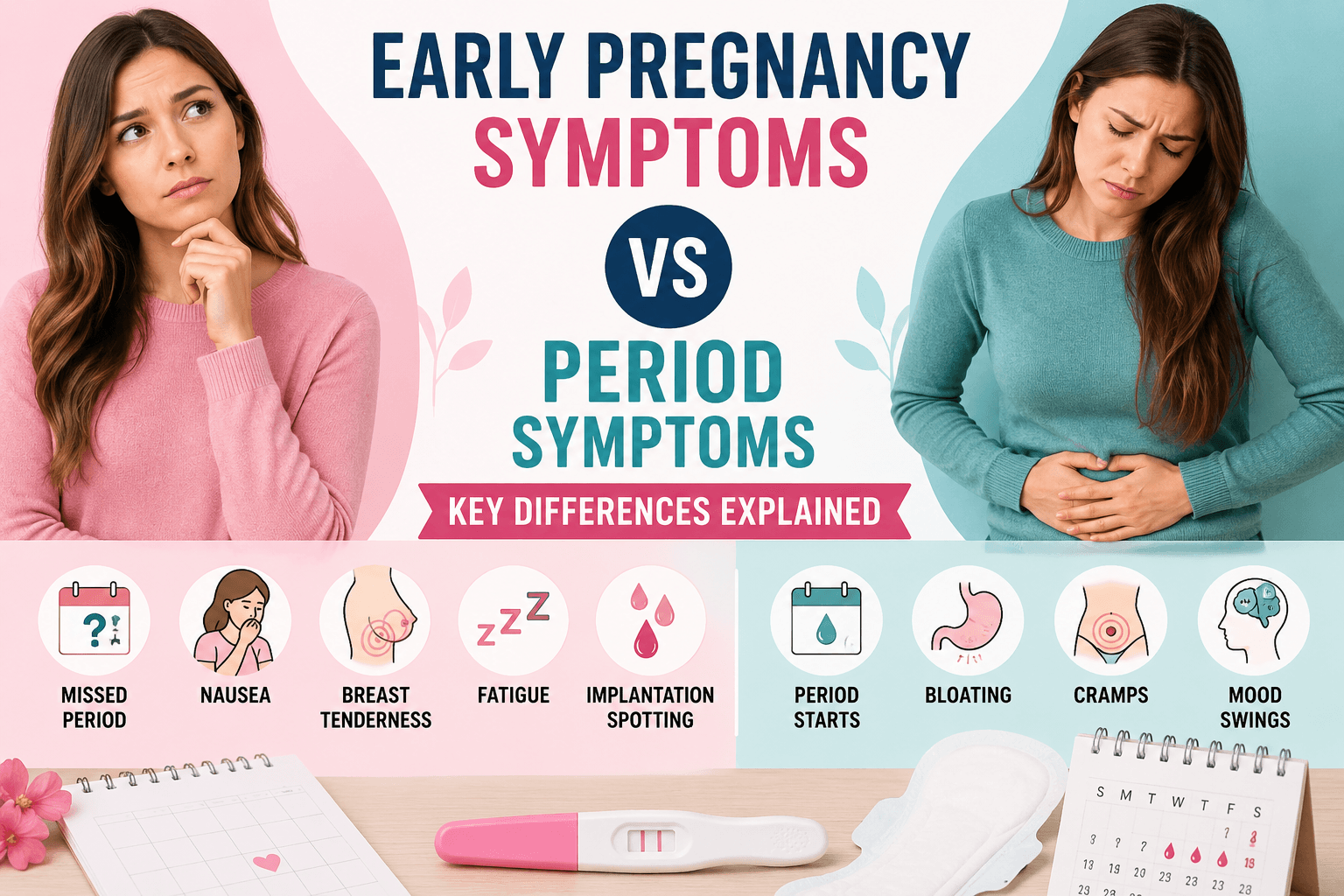
Early Pregnancy Symptoms vs Period Symptoms: Key Differences Explained
Many women experience confusion when comparing early pregnancy symptoms vs period symptoms because the signs can feel very similar. Tender breasts, mood swings, fatigue, cramps, and bloating can happen in both situations, making it difficult to understand what the body is trying to communicate. This uncertainty often leads to stress, anxiety, and endless online searches for answers.
Understanding the difference between early pregnancy symptoms and period symptoms is important for making informed decisions about reproductive health. While some signs overlap, there are several key differences that can help women better recognize what may be happening in their bodies. Knowing these differences can also encourage timely medical guidance, testing, and proper care when needed.
In this detailed guide, we will explore the most common early pregnancy symptoms, compare them with period-related changes, and explain when taking a pregnancy test may provide clearer answers.
Why Early Pregnancy and Period Symptoms Feel Similar
The reason these symptoms often overlap is because both are strongly influenced by hormonal changes. Before menstruation, levels of estrogen and progesterone fluctuate significantly. Similarly, during early pregnancy, hormones rapidly increase to support the developing pregnancy.
Because hormones affect energy levels, mood, digestion, appetite, and breast tissue, women may experience very similar physical and emotional sensations in both cases.
However, subtle differences usually appear as the body responds differently to menstruation compared to pregnancy.
Common Symptoms Shared by Pregnancy and Periods
Several symptoms can occur in both situations, including:
- Breast tenderness
- Mild cramping
- Mood swings
- Fatigue
- Bloating
- Food cravings
- Headaches
- Back pain
Since these symptoms are common before a menstrual cycle and during early pregnancy, they should not be used alone to confirm pregnancy.
Instead, it is important to look at the timing, intensity, and combination of symptoms.
Key Differences Between Early Pregnancy Symptoms and Period Symptoms
1. Missed Period
A missed period is one of the earliest and most recognized signs of pregnancy.
Period:
- Menstrual bleeding begins around the expected date.
- Flow may start light and become heavier.
- Cramping usually decreases once bleeding starts.
Early Pregnancy:
- The period does not arrive.
- Some women notice very light spotting instead of a normal period.
- Spotting is usually shorter and lighter than menstruation.
If a period is late by more than a week, taking a pregnancy test may help provide clarity.
2. Implantation Bleeding vs Menstrual Bleeding
Some women experience implantation bleeding when a fertilized egg attaches to the uterine lining.
Implantation Bleeding:
- Light pink or brown spotting
- Usually lasts 1–2 days
- Much lighter than a regular period
- Often occurs about 6–12 days after ovulation
Menstrual Bleeding:
- Bright red flow
- Heavier bleeding
- Lasts several days
- Often includes clots
Many women mistake implantation spotting for a light period, especially if they are not expecting pregnancy.
3. Cramping Differences
Cramping can happen before menstruation and during early pregnancy, but the sensation may differ slightly.
Period Cramps:
- Often stronger and more intense
- Usually occur in the lower abdomen
- Can radiate to the lower back and thighs
- Improve once bleeding begins
Pregnancy Cramps:
- Typically mild and less painful
- Often described as pulling or stretching sensations
- May come and go gently
- Usually not accompanied by heavy bleeding
Severe pain should always be evaluated by a healthcare professional.
4. Breast Changes
Breast tenderness is common in both pregnancy and premenstrual syndrome (PMS), but pregnancy-related changes often become more noticeable.
PMS Breast Symptoms:
- Mild swelling or soreness
- Symptoms improve when menstruation begins
Early Pregnancy Breast Symptoms:
- Increased sensitivity
- Heavier feeling breasts
- Darkening of the nipples or areolas
- Visible veins may appear
Pregnancy hormones continue affecting the breasts beyond the expected menstrual date.
5. Fatigue Levels
Feeling tired before a period is common, but pregnancy fatigue is often much stronger.
Period Fatigue:
- Mild tiredness
- Usually improves after menstruation starts
Pregnancy Fatigue:
- Extreme exhaustion
- Feeling sleepy throughout the day
- Low energy despite adequate rest
In early pregnancy, progesterone levels rise rapidly, which can significantly increase fatigue.
6. Nausea and Morning Sickness
Nausea is one symptom that is much more strongly linked to pregnancy.
PMS:
- Digestive discomfort may happen
- Bloating is common
- True nausea is less common
Early Pregnancy:
- Nausea may begin around 4–6 weeks
- Certain smells or foods may trigger discomfort
- Morning sickness can happen at any time of day
Not every pregnant woman experiences morning sickness, but it is considered a major early pregnancy sign.
7. Food Cravings and Food Aversions
Hormonal changes can influence appetite in both PMS and pregnancy.
PMS:
- Cravings often involve sweets, salty snacks, or chocolate
- Appetite changes improve after the period starts
Pregnancy:
- Strong cravings or sudden dislikes for certain foods
- Increased sensitivity to smells
- Metallic taste in the mouth for some women
Food aversions are more strongly associated with pregnancy than menstruation.
8. Mood Changes
Hormones can affect emotions in both cases.
PMS Mood Symptoms:
- Irritability
- Anxiety
- Mood swings
- Emotional sensitivity
Pregnancy Mood Symptoms:
- Strong emotional reactions
- Increased sensitivity
- Anxiety or excitement
- Emotional fluctuations that continue for weeks
Because hormone levels remain elevated during pregnancy, mood changes may last longer than PMS symptoms.
9. Basal Body Temperature
Women tracking fertility may notice changes in body temperature.
Before a Period:
- Basal body temperature rises after ovulation
- Drops before menstruation begins
During Pregnancy:
- Temperature remains elevated for over two weeks after ovulation
This method is commonly used in fertility awareness tracking.
10. Frequent Urination
Frequent urination is more common during pregnancy.
PMS:
- Usually no major change in urination
Early Pregnancy:
- Increased need to urinate
- Caused by hormonal changes and increased blood flow
This symptom may begin surprisingly early for some women.
Symptoms That More Strongly Suggest Pregnancy
While no symptom guarantees pregnancy, the following signs are more closely linked with early pregnancy:
- Missed period
- Implantation spotting
- Morning sickness
- Increased urination
- Heightened smell sensitivity
- Persistent fatigue
- Darkening nipples
- Positive pregnancy test
If several of these symptoms occur together, pregnancy becomes more likely.
When to Take a Pregnancy Test
Timing is important for accurate results.
Most home pregnancy tests work best:
- After a missed period
- At least 10–14 days after ovulation
- Using first morning urine for better accuracy
Testing too early can sometimes produce false negative results because hormone levels may still be low.
If the first test is negative but symptoms continue, repeating the test after a few days may help.
Factors That Can Mimic Pregnancy Symptoms
Certain health conditions and lifestyle factors may create symptoms similar to pregnancy.
These include:
- Stress
- Hormonal imbalance
- PCOS (Polycystic Ovary Syndrome)
- Thyroid disorders
- Changes in birth control
- Anxiety
- Poor sleep
- Digestive problems
Because symptoms can overlap, relying only on physical signs is not always accurate.
Understanding Hormonal Changes in the Body
Hormones play a major role in reproductive health. Estrogen and progesterone affect many systems throughout the body, including:
- Mood regulation
- Appetite
- Sleep
- Breast tissue
- Energy levels
- Menstrual cycles
During pregnancy, the hormone hCG (human chorionic gonadotropin) begins increasing rapidly, which contributes to many early pregnancy symptoms.
Understanding hormonal patterns can help women better recognize normal body changes and identify when something feels different.
Emotional Impact of Uncertainty
Waiting to determine whether symptoms indicate pregnancy or an upcoming period can be emotionally overwhelming. Many women experience:
- Anxiety
- Confusion
- Stress
- Fear
- Excitement
- Overthinking
It is important to approach the situation calmly and avoid making assumptions too early. Taking a reliable pregnancy test and seeking professional medical guidance when needed can provide reassurance and clarity.
When to Speak With a Healthcare Professional
Medical advice should be considered if:
- Periods are consistently irregular
- Severe pain occurs
- Heavy bleeding develops
- Symptoms become intense
- Pregnancy tests are confusing or inconsistent
- There are concerns about reproductive health
Professional evaluation can help identify the cause of symptoms and provide proper support.
Tips for Monitoring Reproductive Health
Women can better understand their bodies by tracking:
- Menstrual cycles
- Ovulation timing
- Symptoms
- Mood changes
- Basal body temperature
- Pregnancy test results
Using a calendar or cycle-tracking app may help identify patterns over time.
Awareness of reproductive health supports informed decision-making and encourages early attention to potential concerns.
Final Thoughts
Understanding early pregnancy symptoms vs period symptoms can sometimes feel confusing because both are connected to hormonal fluctuations within the body. Signs like fatigue, cramps, bloating, and breast tenderness are common in both situations, which often creates uncertainty during the early stages.
However, certain symptoms — such as a missed period, implantation spotting, nausea, heightened smell sensitivity, and persistent fatigue — may point more strongly toward pregnancy. Understanding these differences can help women feel more informed and confident while monitoring their reproductive health.
Although symptom tracking can provide clues, a pregnancy test remains the most reliable first step for confirmation. If uncertainty continues or symptoms become concerning, speaking with a healthcare professional is always recommended for personalized guidance and care.