
No products in the cart.
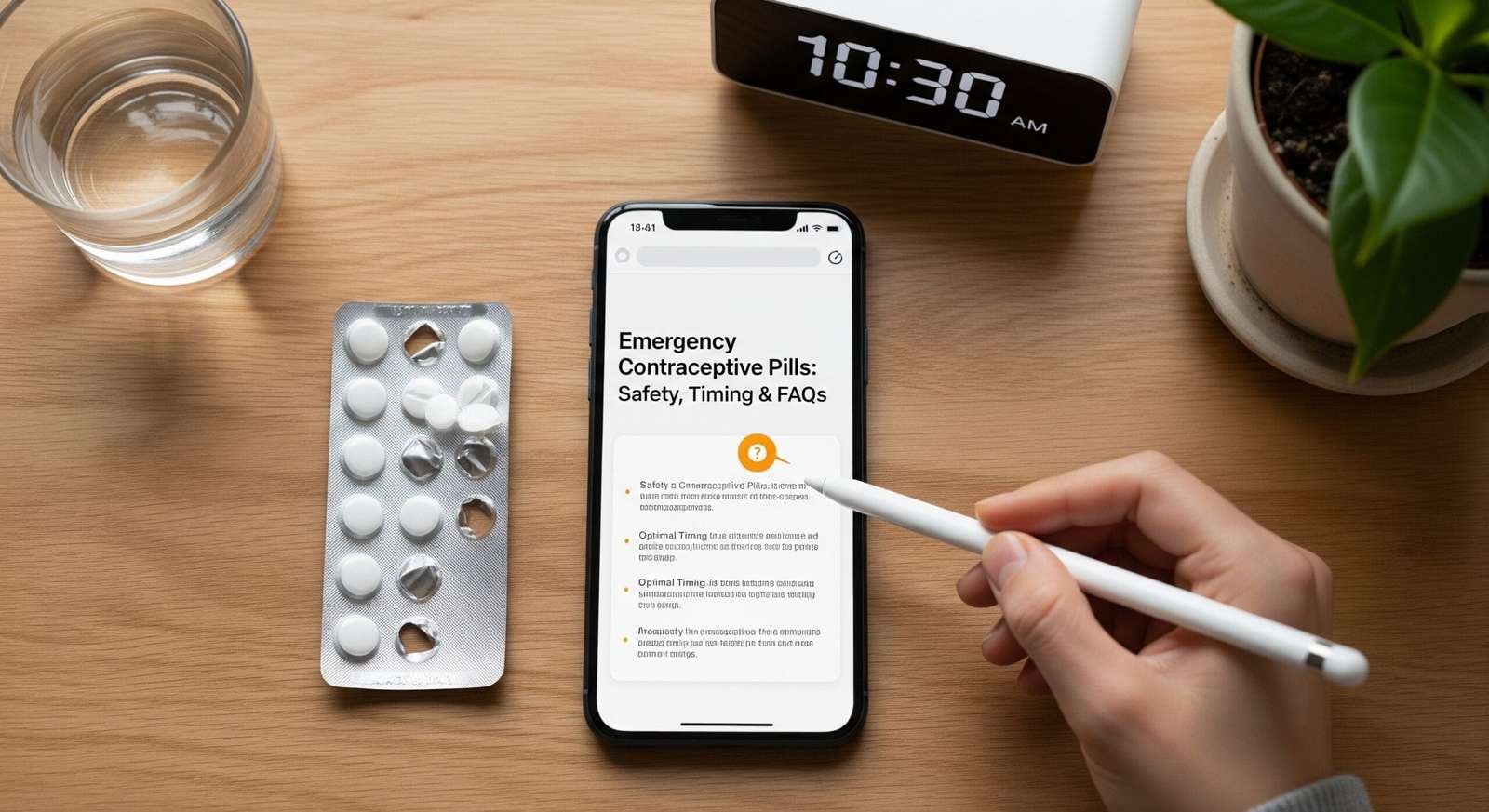
What You Need to Know About Emergency Contraceptive Pills: Safety, Timing & FAQs
Unplanned situations can occur in anyone’s life, regardless of how careful or informed they may be. Missed birth control pills, condom failure, incorrect use of contraception, or unexpected intimacy can all lead to concern about unintended pregnancy. In such moments, Emergency Contraceptive Pills provide a medically approved option to help reduce risk when used correctly and on time.
anned situations can occur in anyone’s life, regardless of how careful or informed they may be. Missed birth control pills, condom failure, incorrect use of contraception, or unexpected intimacy can all lead to concern about unintended pregnancy. In such moments, timely and accurate information becomes essential. Modern reproductive healthcare provides safe, well‑researched post‑coital solutions that help reduce the risk of pregnancy when used correctly.
This in‑depth guide is designed to provide clear, medically accurate, and trustworthy information. It explains how post‑coital contraception works, when it should be used, available options, effectiveness, safety, side effects, myths, and responsible use. The goal is to empower readers with knowledge while maintaining a calm, supportive, and non‑judgmental tone suitable for long‑term informational value.
What Are Emergency Contraceptive Pills?
Emergency contraceptive pills are oral medications taken after sexual intercourse to help prevent pregnancy. They are intended for occasional, emergency use only, not as a replacement for regular contraception. Their effectiveness depends heavily on correct timing and proper use.
These pills work before pregnancy begins. They do not terminate an existing pregnancy and are not the same as abortion medication. Their role is preventive, helping to avoid fertilization or ovulation during the fertile window.
Understanding this distinction is important, as misinformation often causes unnecessary fear or hesitation.
Situations Where Emergency Contraception May Be Needed
Post-coital contraception may be considered in several scenarios, including:
- Unprotected sexual intercourse
- Condom breakage, leakage, or slippage
- Missed or delayed oral contraceptive pills
- Incorrect use of contraceptive patches, rings, or injections
- Sexual assault or coerced intercourse
- Failure of withdrawal (pull-out) method
In all of these cases, time is the most critical factor. Acting as soon as possible significantly increases effectiveness.
Types of Emergency Contraceptive Pills
There are two primary categories of oral post-coital contraception used globally. Each works slightly differently and has its own timing window.
1. Levonorgestrel-Based Pills
Levonorgestrel is a synthetic progestin that has been used safely for decades. It is one of the most widely available options worldwide.
Key characteristics:
- Most effective when taken within 24 hours
- Approved for use up to 72 hours after intercourse
- Available as a single-dose or two-dose regimen
- Often available without a prescription in many regions
These pills primarily delay ovulation. If ovulation has already occurred, effectiveness may be reduced.
2. Ulipristal Acetate Pills
Ulipristal acetate is a newer option that offers extended effectiveness closer to ovulation.
Key characteristics:
- Effective up to 120 hours (5 days) after intercourse
- Maintains higher effectiveness later in the window
- Prescription-only in many countries
- Requires caution when restarting hormonal contraception
Healthcare professionals may recommend this option when intercourse occurs closer to ovulation.
How Emergency Contraceptive Pills Work
The primary mechanism of action is delaying or inhibiting ovulation. Without the release of an egg, fertilization cannot occur, even if sperm are present.
Additional mechanisms may include:
- Thickening cervical mucus, making sperm movement more difficult
- Altering tubal transport of sperm or egg
Importantly, these pills do not:
- Disrupt an implanted embryo
- Cause abortion
- Affect an existing pregnancy
Scientific evidence consistently supports these facts.
Effectiveness and the Importance of Timing
Effectiveness depends largely on how soon the pill is taken after intercourse:
- Within 24 hours: Highest effectiveness
- 24–72 hours: Moderately high effectiveness
- 72–120 hours: Reduced effectiveness, depending on the pill type
Other factors that may influence effectiveness include:
- Timing within the menstrual cycle
- Body weight or BMI
- Whether ovulation has already occurred
Despite these variables, early use remains the single most important factor.
Safety Profile and Side Effects
Emergency contraceptive pills are considered safe for the vast majority of users. They have been extensively studied and approved by major health organizations worldwide.
Common, Temporary Side Effects
- Nausea
- Fatigue
- Headache
- Breast tenderness
- Dizziness
- Mild abdominal discomfort
These effects usually resolve within one to two days.
Vomiting After Use
If vomiting occurs within two hours of taking the pill, another dose may be necessary. Medical advice should be sought in this situation.
Rare Complications
Serious complications are extremely uncommon. However, severe or persistent abdominal pain weeks after use should be evaluated to rule out ectopic pregnancy.
Effect on the Menstrual Cycle
Changes in the next menstrual period are common and usually temporary. The next period may be:
- Earlier than expected
- Later than expected
- Heavier or lighter than usual
A delay of up to one week is generally not concerning. If menstruation is delayed by more than seven days, a pregnancy test is recommended for reassurance.
Impact on Future Fertility
There is no evidence that occasional use of post-coital contraception affects long-term fertility. Ovulation and normal menstrual cycles resume quickly, often in the very next cycle.
These pills do not damage the ovaries, uterus, or hormonal system. However, because they are less effective than regular methods, they should not be relied upon as primary contraception.
Use During Breastfeeding
Certain levonorgestrel-based options are considered compatible with breastfeeding. Small amounts of hormone may pass into breast milk but are not known to harm the infant.
Ulipristal acetate may require temporary interruption of breastfeeding. A healthcare professional should be consulted for individualized advice.
Protection Against Sexually Transmitted Infections
Emergency contraceptive pills do not protect against sexually transmitted infections (STIs).
Barrier methods such as condoms remain essential for STI prevention. In cases of potential exposure, medical evaluation and testing may be appropriate.
Common Myths and Misconceptions
Myth 1: They cause abortion
Fact: These pills prevent pregnancy before it starts and do not affect implantation.
Myth 2: Repeated use causes infertility
Fact: There is no scientific evidence supporting this claim.
Myth 3: They are dangerous for young users
Fact: They are considered safe across reproductive age groups when used as directed.
Myth 4: They work even after pregnancy begins
Fact: They are ineffective once implantation has occurred.
Responsible Use and Counseling
While emergency options are valuable, frequent reliance may indicate the need for a more reliable regular contraceptive method. Consulting a healthcare professional can help individuals choose from:
- Oral contraceptive pills
- Intrauterine devices (IUDs)
- Implants
- Injections
- Barrier methods
Personalized counseling considers medical history, lifestyle, preferences, and reproductive goals.
Access, Privacy, and Informed Choice
Access to accurate information and discreet services plays a vital role in reproductive healthcare. Online platforms have increased convenience and privacy, but users should always ensure they rely on credible sources that provide genuine products and medically sound guidance.
Informed choice is about more than access—it involves understanding how, when, and why to use these options responsibly.
Frequently Asked Questions (FAQs)
1. How soon should emergency contraception be taken after intercourse?
Emergency contraception should be taken as soon as possible after unprotected intercourse. Effectiveness is highest within the first 24 hours and gradually decreases with time. Some options may still offer protection up to five days later, but early use is always recommended for the best results.
2. Can emergency contraception fail?
Yes, no method is 100% effective. Factors such as delayed use, timing of ovulation, and individual biological differences can affect outcomes. If the next menstrual period is delayed by more than one week, a pregnancy test is advised.
3. Is it safe to use emergency contraception more than once?
Occasional repeat use is considered medically safe, but it should not be relied upon as a regular method of birth control. Frequent use may lead to menstrual irregularities and indicates the need for a more consistent contraceptive method.
4. Will emergency contraception affect future fertility?
No. There is no scientific evidence that using emergency contraception has any long-term effect on fertility. Normal ovulation and reproductive function resume quickly after use.
5. Can emergency contraception be used by adolescents?
Yes. Emergency contraception is considered safe for adolescents and adults of reproductive age. Access policies vary by country, but age alone is not a medical restriction.
Final Summary
Emergency contraception is a critical component of modern reproductive healthcare. When used correctly and promptly, Emergency Contraceptive Pills offer a safe and effective way to reduce the risk of unintended pregnancy after contraceptive failure or unprotected intercourse.
Understanding how these methods work—including timing, safety, effectiveness, and limitations—allows individuals to make calm, informed decisions without fear or stigma. Access to reliable information, professional medical guidance, and responsible use together support reproductive autonomy, long-term health, and overall well-being.